David Abram emphasizes the importance of our relationship with the more-than-human world: “We are human only in contact and in connection with what is non-human.”
The medium of sensory perception is our body, which is in fact the “subject of consciousness.” Maurice Merleau-Ponty discovers the reciprocal character of bodily perception as the mutual conditioning of perceiving and perceived being; in a certain sense, it even concerns a “reversible aspect of the generally living element, that is, of the ‘flesh,’ which is at once felt and feeling.” Subject and object thus become dynamically communicating, mutually conditioning and interpenetrating entities; this points to the complex and intelligible character of reality. It is therefore not a matter of explaining the world from the outside, “but of giving the world a voice from the situation we experience within the world itself…”.
The interpretations of bodily perception by Merleau-Ponty and Abram correspond, in this sense, to the experience of the wild as described by the American poet Gary Snyder: “The wild… is neither subject nor object… it must be approached from within, as the inner value of what we are.”
…The work of the visual action and conceptual artist Miloš Šejn embodies such a relationship to the world. Šejn’s art is rooted in his strong connection to the mythical and historical memory of the landscape of the Bohemian Paradise and the Krkonoše Mountains, and he is thus deeply connected to the traditions of 19th-century Romanticism (Karel Hynek Mácha, Caspar David Friedrich). In this sense, walking through the landscape and pilgrimage form an integral part of his art.
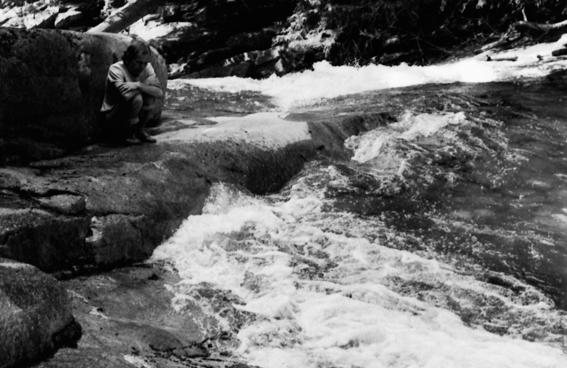
Already in his childhood, he undertook extensive hikes and ornithological or botanical research trips in the surroundings of Jičín and in other regions, which significantly shaped his artistic expression. He recorded his observations using a camera and later a film camera, and created collections of plants, stones, natural pigments, and so on. From the mid-1960s onward, the aesthetic dimension of this activity became increasingly important to him.
An important recurring motif in Šejn’s work is the concept of a “journey” (that is, of creation) as a kind of “wandering” in the sense of a dreamlike state of consciousness, in which the mind and the landscape are in a constant emotional exchange, from which the language of an artwork gradually emerges. This wandering—often explored by the artist (for example in the labyrinths of the rock cities of the Bohemian Paradise)—evokes the idea of immersion into hidden secrets of nature and the destabilization of the self, its expansion or “dissolution” within the greater whole of existence.
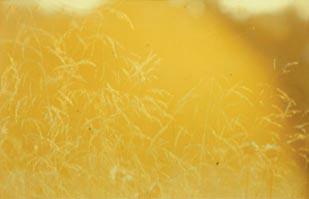
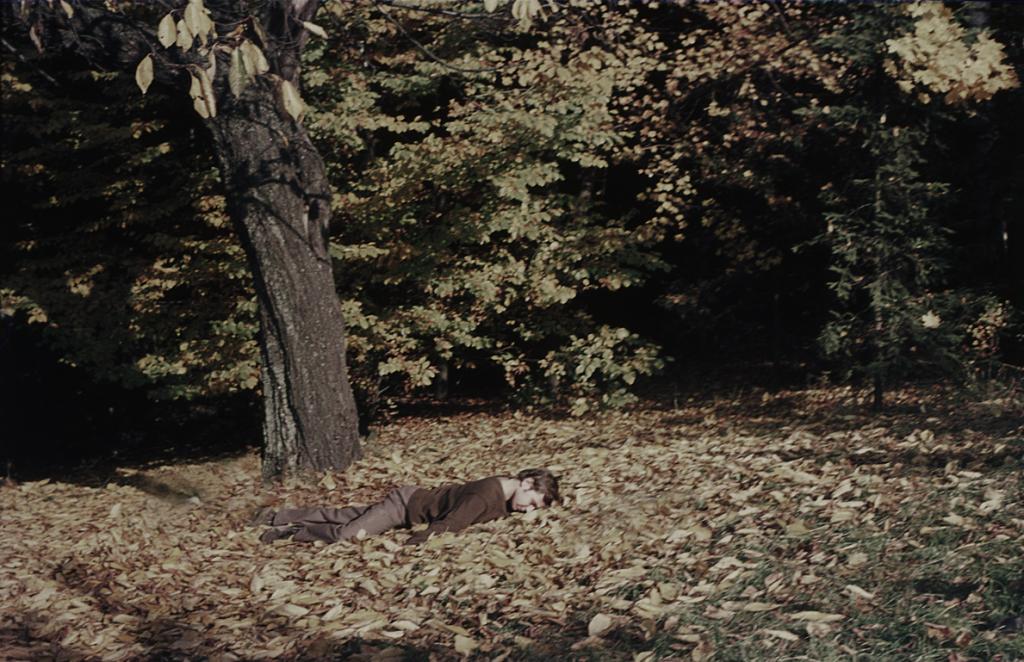
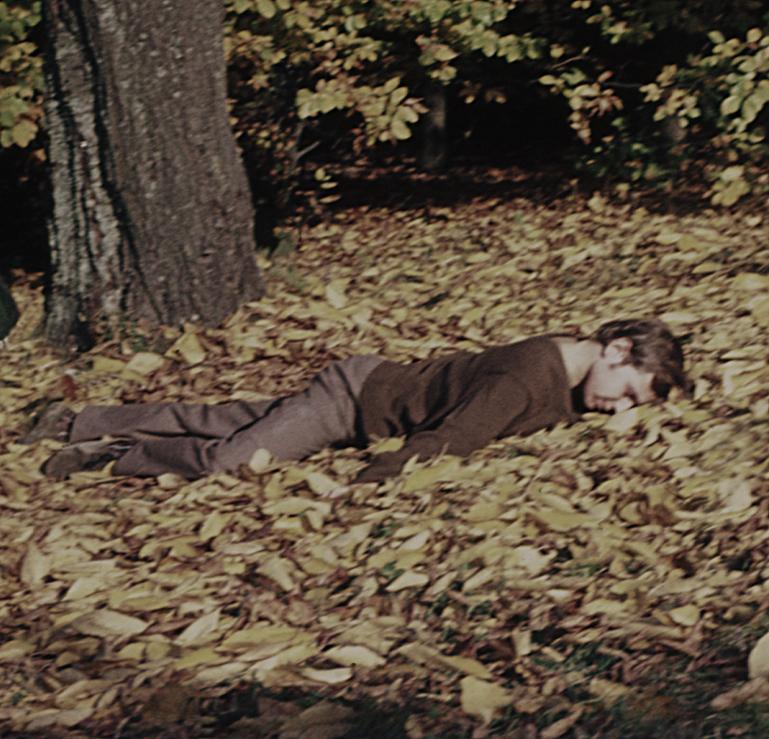
Miloš Šejn experiences the landscape as a living body, directly connected to his own. This is expressed through “touches” and gestural traces in his interaction with the landscape. His call “to touch and to sound!” resonates with the idea of the Romantic painter Philipp Otto Runge: “Everything resounds in a single chord.” A characteristic example is his action “Dotek trávy / Touching the Grass” (1967), which was connected with the experience of “oceanic consciousness”: “I touched the grass and became everything—I saw everything, I felt everything, and I was felt by everything.”
Novalis writes about this “quality of being outside oneself”: “It is not seeing, hearing, feeling; it is composed of all three, more than all three: a sensation of immediate certainty, a perception of my truest, most personal life.” As with Novalis, this state—where perception and knowledge transform of their own accord—is, in Miloš Šejn’s case, also connected to the perception of beauty as a holistic spiritual character of the world. The spiritual and the physical, the lawful in nature and the miraculous, appear as two sides of the same reality.
Friedrich Wilhelm Joseph Schelling also speaks of this when reflecting on the creative, form-giving forces in nature and their relation to the spiritual. For Schelling, an inner spiritual substance is hidden in all things in this world—one that is always active and waiting to be revealed.
Extract from text by Jiří Zemánek: Sich berühren und klingen / Miloš Šejn und die Phänomenologie der Wahrnehmung, Hagia Chora 17/2003






 Wander
 Awake Dreaming



 Academy Archives